
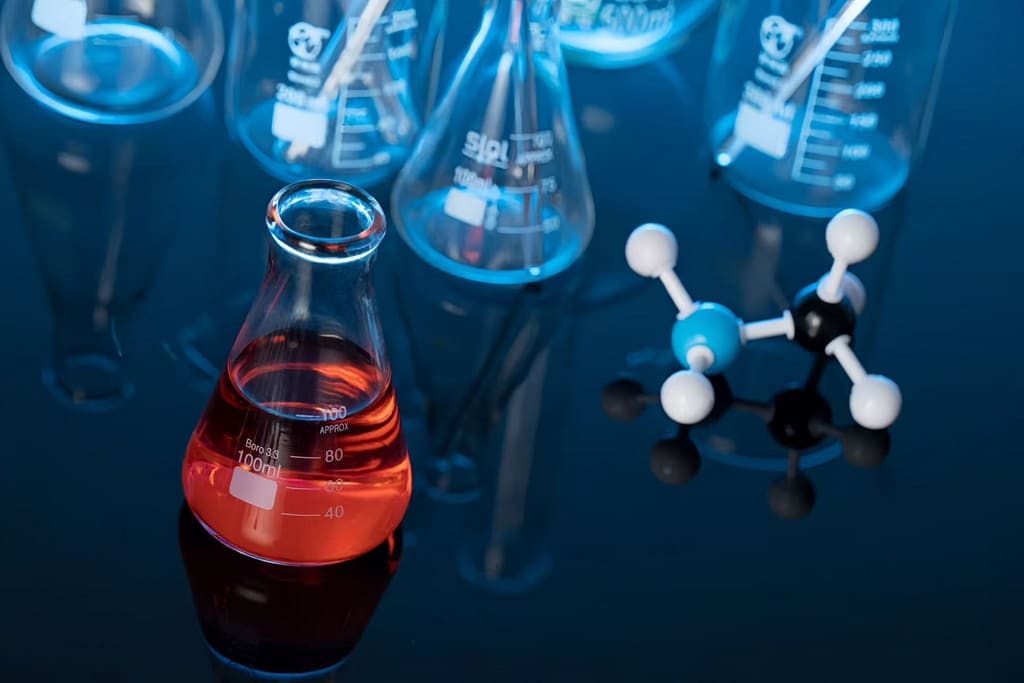
Glyoxal 40% is an aqueous dialdehyde used in crosslinking and chemical synthesis. Selecting it for a coating, textile finish or resin starts with the reacting components and impurity limits, rather than a general promise of process improvement.
Chemical or ingredient identity
Glyoxal, also called ethanedial, is the simplest dialdehyde. The commercial 40% product is an aqueous mixture rather than pure glyoxal; its formula and molecular weight describe the glyoxal component. In water, glyoxal exists in hydrated and associated forms, which is relevant when evaluating its behavior in a formulation.
The aldehyde functionality makes this material useful in crosslinking reactions and as a chemical intermediate. Industrial uses include paper coating systems, textile and leather processing, coatings and resins. Grade selection should consider both the glyoxal content and the specified formaldehyde limit. Application trials should establish suitable dosage and process conditions for the buyer’s formulation. The specifications below define the supplied solution; packaging and storage information describe how to receive and handle it.
Selecting a formaldehyde limit
The supplied range includes formaldehyde limits of 100, 500 and 1,000 ppm. Specify the required maximum in the purchase request; a low-formaldehyde grade should not be described as formaldehyde-free.
Test crosslinking, viscosity development, appearance and storage stability in the full formulation. The suitable dose and reaction conditions depend on the polymer or substrate, other ingredients and processing equipment.
Application considerations
Paper & Packaging: Use glyoxal as a crosslinking ingredient in paper coating and polymer systems. Its aldehyde groups react with compatible formulation components. Evaluate the grade in the intended coating recipe and processing conditions before setting a production dosage.
Textiles & Leather: Glyoxal is used in textile finishing and leather processing as a reactive crosslinking ingredient. Selection depends on the treatment chemistry and the required formaldehyde limit. Confirm compatibility and finishing performance through trials using the selected industrial grade.
Coatings & Resins: The dialdehyde functionality supports crosslinking reactions in compatible coating and resin systems. Glyoxal can also serve as an intermediate in resin chemistry. Buyers should provide their composition and impurity requirements so the appropriate supplied grade can be selected.
Oilfield Formulations: Glyoxal is used in oilfield chemical formulations, including crosslinking and hydrogen sulfide scavenging systems. Performance depends on the complete formulation and operating conditions. Establish material compatibility, dosage and suitability in the actual process during application evaluation.
Purchasing specification
| Parameter | Supplied grade / limit |
|---|---|
| Glyoxal content | 40 ± 0.5 % |
| Appearance | Colorless transparent liquid |
| Color (Pt-Co / APHA) | ≤20 |
| Acidity (as CH₃COOH) | ≤0.2 % |
| Formaldehyde content | ≤100 / ≤500 / ≤1,000 (selected grade) ppm |
These figures describe the linked ZXCHEM supply grade. Reference properties and application results are separate from batch release limits.
Handling and documentation
Avoid breathing mist and contact with skin or eyes. Use suitable protective gloves and eye protection, and work with adequate ventilation.
Product specifications and documents
Glyoxal 40%. Each page provides the current grade information and available technical documents.
Questions and answers
How should I select the supply grade?
Identify the intended application and the specification limits shown on the product page. Confirm the selected grade and test basis against its current TDS.
What should be reviewed before a trial?
Review the grade-specific SDS, exposure controls and compatibility with the complete process or formulation. The required performance and dose must be established in application testing.